As envoy changes, Iran and Georgia seek to strengthen ancient bonds
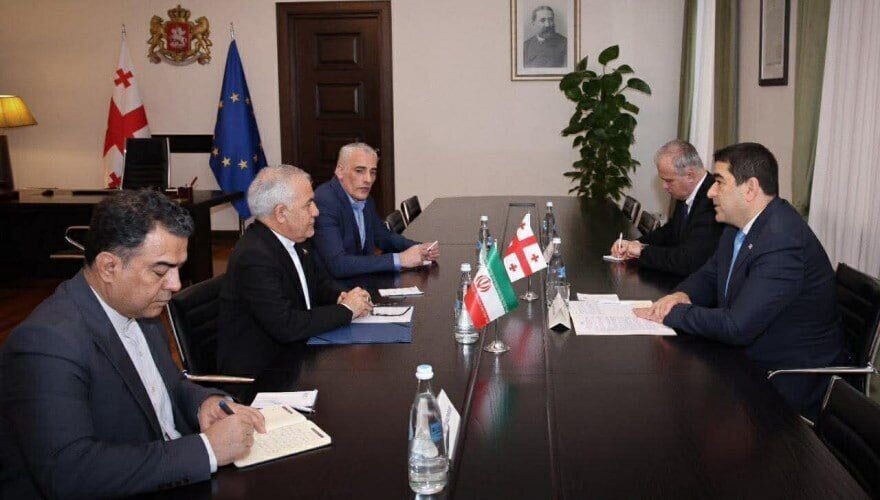
TEHRAN – Iranian Ambassador to Georgia Mahmoud Adib stated that Tehran's policy in the Caucasus aims to maintain peace and respect the territorial integrity of countries in the region. He made these comments during a meeting with Georgia's Parliament Speaker Shalva Papuashvili as his mission to Georgia concluded.
Adib emphasized the important role of parliaments in promoting mutual interests and described the cancellation of visa requirements as a sign of mutual political will. The Iranian diplomat further highlighted the need to expand parliamentary diplomacy and exchanges between friendship groups.
The Georgian parliamentarian, in turn, commended the Iranian ambassador for his efforts to strengthen bilateral ties. "We are aware of your invaluable efforts to cement relations. We are pleased that you, as the Iranian ambassador, managed ties well during recent tensions in the South Caucasus," said Papuashvili. He added that Georgia's policy also aims to maintain peace and stability in the region.
Adib will be succeeded by Ali Moujani, who has already departed Tehran for Tbilisi. Prior to his departure, Moujani met with Iranian President Masoud Pezeshkian, who tasked him with further enhancing ties between the two countries. The president stressed that this need is particularly pressing given the “evolving regional and international dynamics in the Caucasus.”
Pezeshkian also underscored the Caucasus’ strategic role as a vital bridge between Asia and Europe. He described the region as a “historic, cultural, and economic crossroads” capable of connecting regional and trans-regional economies, emphasizing that deeper engagement with Caucasus countries, particularly Georgia, should be a diplomatic priority.
Moujani told the president that he pledges to leverage all potential to deepen friendly relations and enhance Iran’s standing in the Caucasus.
Iran and Georgia share ancient ties dating back over 2,500 years. While historical rivalry and 19th-century treaties placed Georgia under Russian influence, modern diplomatic relations began in 1992 after the USSR's collapse. Analysts believe that recent high-level visits, especially by Georgia's Prime Minister to Iran in 2024, signal a mutual desire to open a warmer, more cooperative chapter. Both sides emphasize boosting economic ties, with 47 existing agreements as a foundation, and see potential in areas like transit, technology, and regional projects.
Some challenges remain, however. They stem mainly from sweeping Western sanctions on Iran, which impede trade and investment, as well as from historical periods of political distance influenced by Georgia's Western alignment. Georgia is also looking to establish stronger ties with China which could indicate a broader foreign policy pivot toward the East.
Leave a Comment